Stop Arguing, Start Innovating: The Future of the Digital Workspace
Forget WFH, IRL or RTO – the world needs a new way to bring remote, hybrid and in-office teams together.

The binary debate around Working From Home vs Return To Office is missing the bigger picture – the workplace needs to move forward.
Weighed down by our experiences of the past, this ideological tug-of-war has become entrenched, leaving employees frustrated and employers struggling to balance staff retention with efficiency savings.
It’s increasingly clear: something has to change.
By now it seems undeniable that the home-office genie will never fully return to its bottle. The growth in remote work opportunities shows absolutely no sign of slowing down, with the Word Economic Forum predicting the sector will grow by 25% by 2030 to around 90 million positions as companies seek to hire the best talent, regardless of where they are located.
And yet, despite this boom, there are aspects of the in-person working experience that no amount of home-office convenience will ever truly compensate for. Physical touchpoints still carry a huge significance, and although the paradigm of the "office" has already shifted for millions, somehow we’re still struggling to fully adjust to what has been left behind.
A complex mix of priorities

A recent survey by Gallup of US employees found that 62% of people feel emotionally detached from their job, but that 64% of them would quit if their employer offered no remote flexibility at all.
Meanwhile, a Future Forum study from 2023 found that 25% of fully remote workers feel “lonely” at work, compared with just 16% of fully on-site employees. That same year, the Pew Research Centre found that 53% of home workers found it difficult to form connections with their colleagues, and yet 56% said it helps them focus, successfully complete their tasks and meet important deadlines.
Employees want flexibility, so digital and physical workspaces need to integrate if they are to build strong teams for the future.
Despite these very clear findings, CEOs are still pursuing blanket return-to-office orders that leave staff holding endless video calls from their desks. Meanwhile, remote-first organisations around the world are beginning to discover that a company culture cannot be built through a Slack channel alone. Neither side seems to have all the answers, so maybe it’s time to move past the rigidity of these options and look to what comes next?
Time for a new horizon
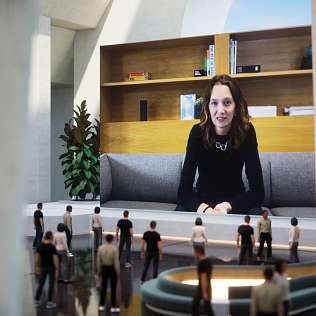
Can remote work be made to feel more social? Can virtual presentations be given more ‘physical’ presence? Can AI be integrated into onboarding, training or operations without feeling alien?
These are all questions we set out to answer as part of our most recent product release – a project more than a year in development that involved every corner of our company.
VIEW: the Virtual Integrated Employee Workspace

VIEW is a new horizon for the future of work.
Our goal was to create a professional ‘Third Space’ that can tackle some of the persistent problems that people face across all workplace models: remote, hybrid & in-office.
Combining AI with a whole suite of Journee's own technologies, VIEW provides companies with a way to onboard, train, communicate, collaborate, and celebrate their employees that is equally accessible to all. Put simply: it's a stage, a welcome desk, a library, a company lounge, and a water-cooler all in one, and it can be accessed easily on any internet connected device. It's like having miniature digital office, anywhere you go.
Our hope is that VIEW will help deliver a better working experience for teams all over the world and move the debate around digital vs. physical workspaces forward. Because right now the world needs new solutions, not just new ways of framing the same old debate.
Other Articles

Five Steps to Create the Perfect Conversational AI Agent
Published 7 August 25
Fostering Brand Loyalty and Post-Purchase Engagement in the Automotive Industry with AIM
Published 21 November 24
Fostering Collaborative and Social Car Configuration Experience in the Automotive Industry with AIM
Published 21 November 24
Unlock Immersive Product Discovery and Exploration in the Automotive Industry with AIM
Published 28 October 24
The Ultimate Customer Experience with Journee AIM - Automotive Immersive Module
Published 14 October 24
How AI Changes the Future of Automotive Car Selling and Buying Experience
Published 26 September 24
Journee's Immersive Tourism Solutions: Shaping the Future of Travel Experiences
Published 11 September 24
The Ultimate VR Application Guide for The Automotive Industry
Published 21 August 24
The Impact of Apple Vision Pro in Automotive - Practical Use Cases of MR Throughout The Value Chain
Published 21 August 24
Where Digital and Physical World Collide: XR and Immersive Virtual Experiences Used In Automotive Industry
Published 26 July 24
Transforming the EV Buying Experience with Journee's Premium Virtual Solutions
Published 6 June 24
Exploring Immersive Virtual Worlds powered by JourneeX with Apple Vision Pro
Published 6 May 24
Shaping Virtual Experiences in the Immersive Web with Generative AI: The Next Frontier
Published 19 March 24
From Vision to Reality: Discover JourneeX - The Premium Enterprise Solution Suite for Virtual Experiences
Published 1 September 23
Go From 3D Design to Immersive Web Application with JourneeX Weblayer
Published 1 September 23
Luxury 3.0: Bringing Designer Brands into the Immersive Web
Published 1 September 23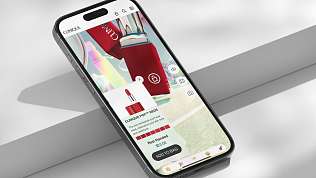
The Power of Omnichannel Engagement: How Beauty Brands Can Leverage Immersive Virtual Experiences for Competitive Advantage
Published 1 September 23
The Future of eCommerce: How iCommerce is Revolutionizing the Retail Landscape
Published 1 September 23
Immersive Web Next-Gen CRM: All You Need to Know
Published 1 September 23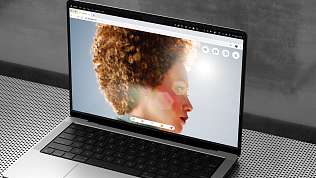
Getting Started: Creating Your Immersive Web Experience
Published 1 September 23
Hosting Immersive Experiences: Shared or Owned Space (Metaverse)?
Published 1 September 23
JourneeX Brings AI Experiences to the Immersive Web with ChatGPT Integration
Published 1 September 23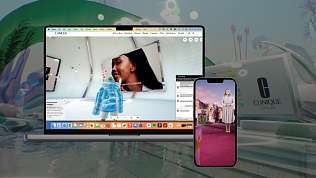
What is the Immersive Web? Everything Businesses Need to Know
Published 1 September 23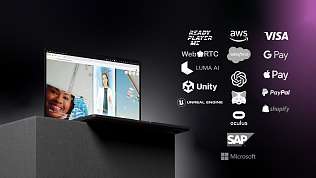
JourneeX Tech Integrations and Opportunities to Upgrade your Immersive Web Experiences
Published 1 September 23
How to Integrate Metaverse Technology and an Immersive Web Strategy Into Your Business?
Published 1 September 23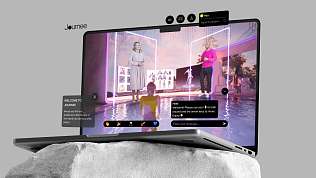
Exploring the Possibilities of Metaverse Technology and the Immersive Web for Fashion Brands
Published 31 August 23